If you have spent any time in a planetarium lobby, you have heard the dreaded question: "So, are you a Scorpio or a Leo?" Every time I hear that, I have to physically restrain myself from reciting the inverse square law of gravity until the patron leaves. In 1975, a group of scientists decided they had finally had enough. They published an "Objections to Astrology" statement in The Humanist magazine. You’ve likely heard rumors that a massive block of Nobel laureates signed it. The number usually tossed around is inflated by the internet rumor mill, so let’s clear the deck: 18 Nobel laureates were among the 186 scientists who signed that declaration.
This wasn't just a group of professors having a bad day. It was a formal acknowledgment that when people stop thinking critically about the positions of stars and planets, they stop being able to distinguish evidence-based physics from marketing fluff. That same inability to distinguish rigor from wishful thinking is exactly what ruins modern aerospace engineering proposals. If you want to dive deeper into the physics of how we actually get off the ground, check out our archives in Space, Tech, or Science.
Rationality vs. The "Game-Changing" Myth
I loathe the phrase "game-changing." When someone describes a new rocket engine or a lunar lander concept as "game-changing," they are almost always hiding the fact that they haven't run the mass-budget numbers. In 1975, the scientific community was still riding the wake of the Apollo program. We had just spent a decade learning that engineering is the art of compromise, not the art of miracles.
The signatories of the 1975 statement understood constraints. They knew that human knowledge is built on the foundation of the scientific method—not on the vague promises of celestial alignment. When we look at the history of Apollo, we see that the architecture wasn't chosen because it was "cool." It was chosen because it was the only way to avoid wasting precious payload mass. Let’s look at the actual trade-offs involved in that era of design:
Constraint Strategy Resulting Waste/Cost Mass to Orbit Lunar Orbit Rendezvous (LOR) High complexity in docking maneuvers Travel Time Chemical Propulsion Requires massive fuel stages Safety Multi-stage capsules Redundant systems increase dry massPropulsion: The Boring Reality of Physics
While the astrologers of 1975 were busy charting "influence," the real engineers were fighting the tyranny of the Rocket Equation. If you want to get to Mars, you have two primary schools of thought: Nuclear Thermal Propulsion (NTP) or high-specific-impulse electric propulsion. Specific Impulse (Isp)—which is simply a measure of how efficiently a rocket engine uses its propellant, essentially "rocket gas mileage"—dictates everything.
If you choose electric propulsion, you get incredible efficiency, but you pay for it in time. It takes months, sometimes years, to spiral out of Earth's orbit. If you are a human being traveling to Mars, you don’t want to be in deep space for three years soaking up cosmic radiation. So, we look at nuclear propulsion. It gives you higher thrust, but it introduces the complexity of reactor shielding and mass. People who ignore these travel time constraints are essentially practicing the engineering equivalent of astrology: they are wishing for a result without respecting the physical mechanisms required to achieve it.
The Docking Fallacy
During the Apollo era, there was an intense debate over whether to use Earth Orbit Rendezvous (EOR) or Lunar Orbit Rendezvous (LOR). The proponents of LOR—specifically John Houbolt—were attacked https://bizzmarkblog.com/the-tyranny-of-the-scale-why-mass-is-the-only-metric-that-actually-matters/ by people who thought docking in lunar orbit was insane. Docking, defined as the precise mechanical alignment and latching of two spacecraft moving thousands of miles per hour, is inherently risky. However, it saved us from launching a single, city-sized rocket from Earth. The "waste" of a docking system is a fraction of the mass waste of a giant, single-stage direct-ascent ship. Smart engineers prioritize the mission; loud-mouthed enthusiasts prioritize the spectacle.
Why the 18 Nobel Laureates Mattered
Why did 18 of the smartest people on the planet care about a bunch of horoscope charts? Because the credibility of science is a finite resource. If the public can be convinced that their personalities are determined by Jupiter’s position, they can be convinced that we don’t need to fund basic research, or that we can ignore the hard physics of climate change or space travel.
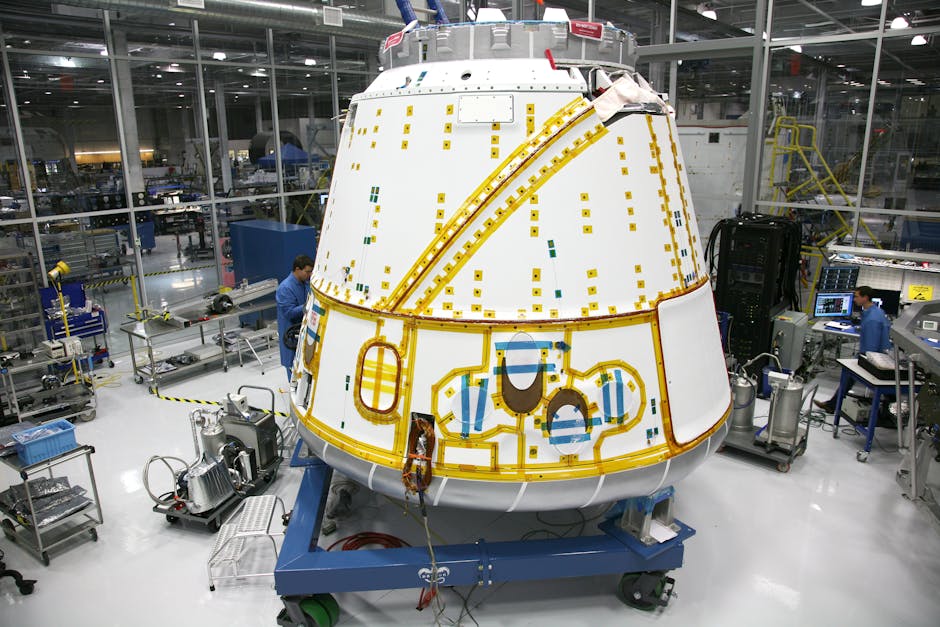
The 1975 statement wasn't a "debunking" in the sense of a YouTube video. It was a declaration of intellectual boundaries. It said: We know how the universe works, and it doesn't care about your birth date. It’s the same intellectual boundary we direct ascent vs rendezvous need today when people propose "shortcut" propulsion systems that violate conservation of momentum, or mission architectures that skip basic docking safety protocols because they think they've found a "clever" workaround.
The Problem with Skipping Constraints
I have spent 12 years watching people present mission concepts that look great on a slide deck but fall apart the moment you add the mass of a life-support system. These people always hate me because I ask: Where is the water recycling efficiency? How much mass are you losing to radiation shielding?
Ignore the physics: You get a pretty drawing of a spaceship. Respect the physics: You get a vehicle that can actually carry a crew to orbit. Understand the constraints: You realize that most "innovations" are actually just repackaged, less efficient versions of what we did in 1969.Let’s talk about that waste. Every pound of extra structure—every unnecessary latch, every "flexible" design choice that doesn't serve a specific engineering requirement—is mass that could have been used for fuel, science equipment, or food. When you look at the 1975 astrology objection, you are seeing a group of people who spent their lives trying to maximize signal and minimize noise. Astrology is pure noise. High-level physics is the signal.
Conclusion: Stay Grounded
The 1975 objection is still relevant today because the impulse to find meaning in the stars—without doing the math—remains a powerful human distraction. Whether it’s an astrologer looking for fate or a startup founder promising to colonize Mars with a system that ignores the basics of deep-space propulsion, the error is the same: they are avoiding the constraints of reality.

The 18 Nobel laureates knew that if you let the fuzzy thinking of the occult slide into the mainstream, you lose the ability to maintain the rigor required for actual exploration. We need to stop treating astrology as a valid pastime and start treating physics as the only map we have for the future. If you are planning a mission to Mars, don't look at your horoscope—look at your specific impulse, your mass fraction, and your docking redundancy. Everything else is just noise.
For more on how we build things that actually work, check out our recent breakdowns on orbital mechanics and deep-space energy management in our Science and Space sections.