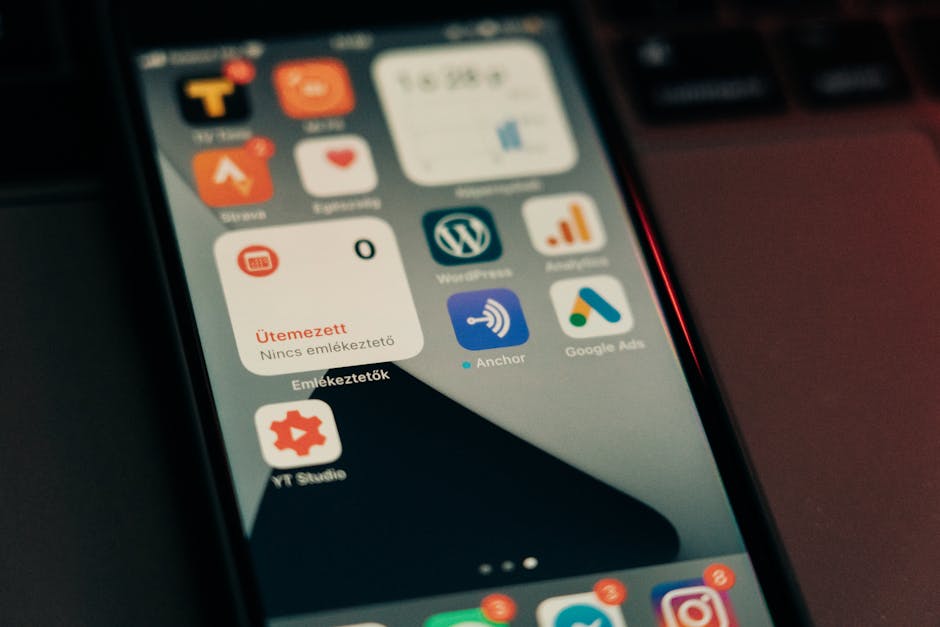
You hear the phrase ‘mobile-first’ in every product strategy meeting. Executives love it. Designers put it on their resumes. But if you are a https://sonicmenuusa.com/how-app-based-convenience-is-reshaping/ user, the term is usually just a synonym for a smaller screen. That is wrong. Mobile-first is not about shrinking a desktop website. It is about acknowledging that you are likely distracted, standing in a line, or trying to pay for something with your thumbs while balancing a coffee.
I have spent twelve years fixing broken app flows. I keep a private notebook of what I call ‘tiny frictions.’ These are the small, annoying hurdles that make you close an app forever. If a login takes more than three seconds or a payment button is hidden behind a modal, you leave. That is the reality of mobile-first. It is not about pretty layouts. It is about surviving the five seconds of attention you give an app before you decide it is garbage.
Smartphones as the central hub of your digital life
Data from the Pew Research Center confirms what we already feel in our pockets. The smartphone has replaced the computer for most daily tasks. We do not use apps to explore. We use apps to complete tasks. If I am checking a balance, buying a ticket, or playing a quick game, I want the experience to be a utility, not an event.
When an app is truly mobile-first, it understands that the smartphone is a service hub. It integrates with the hardware. It uses your face for biometrics so you do not type a password. It hooks into mobile wallets so you do not dig for a physical credit card. If an app makes you type your billing address on a virtual keyboard, it has failed the mobile-first test.
Why frictionless UX is the baseline
I test checkout flows on a 3G connection on purpose. If the app breaks or the loading spinner sits there for an eternity, the developer ignored the reality of mobile network fluctuations. A mobile-first design assumes the connection will drop. It assumes the user is in a hurry.
Frictionless UX means:
- Minimal input fields. If you need my address, find a way to pull it from the phone. Predictive buttons. The main action should always be within reach of a thumb. Guest checkout options. Forcing a sign-up flow before a purchase is a guaranteed way to lose a customer. Clear, visual feedback. If a button is loading, show me that it is working. Do not leave the screen frozen.
Look at how companies like MrQ casino approach their entry point. They know that users want to get to the action quickly. They strip away the fluff. They do not force users through a maze of marketing text before they can start. That is a mobile-first philosophy applied to a specific task. They recognize that if the barrier to entry is high, the user will just find a different app that lets them start in two taps.
The convenience factor and the end of comparison shopping
When you are on a desktop, you have twenty tabs open. You compare prices. You read reviews on a second screen. On mobile, that behavior changes. The cross-device use pattern is simple. You might research a product on a desktop, but you buy it on mobile because that is where the payment is convenient.
Mobile-first apps take advantage of this by offering a streamlined checkout. If I have to open my laptop to verify a payment, I will probably decide I do not want the item anymore. Mobile wallets changed everything here. They removed the need to manually enter sixteen-digit card numbers. This convenience is a double-edged sword. It reduces comparison shopping because the app that is easiest to use wins the transaction. You stop caring about the marginal price difference when the checkout is one click away.
Personalization or data trap
Personalization is the buzzword that never dies. Brands claim it makes things better. Sometimes it does. If an app remembers my preferences and greets me with the services I use most, it saves me time. That is the positive side of mobile-first personalization.
The dark side is the tracking. Every time an app predicts what you want, it is gathering data on your habits. I hate when brands pretend there are no trade-offs. You are trading your behavioral data for the convenience of a curated home screen. When you see a recommendation engine, know that it is trying to keep you in the app as long as possible. A truly mobile-first app uses this data to simplify your navigation, not to distract you with endless notifications.

The impact of visual load
We often talk about design, but image assets are the silent killers of mobile performance. If an app is heavy, it lags. I have seen beautiful apps that fail because they load massive image files over mobile data. Tools like Magnific are great for developers to scale and optimize visuals, but the responsibility lies with the product team to use them correctly.
Users do not care how high the resolution is if the screen is stuck on a white page for five seconds. A mobile-first app prioritizes content delivery. It loads the text and the buttons first. The fancy graphics can wait for the background to catch up. If your app is not fast, the beauty does not matter.
Comparing mobile-first to traditional desktop-first approaches
It is helpful to look at the differences in how these apps function. The table below breaks down the common friction points I track in my daily work.
Feature Desktop-First Thinking Mobile-First Thinking Login Long forms, password recovery focus Biometric auth, social sign-in Navigation Complex top-level menus Thumb-friendly bottom bars Payment Card entry, billing forms Mobile wallets, one-tap checkout Performance Heavy assets, complex scripts Optimized load times, lazy loading Engagement Newsletters, long reads Push notifications, deep linksWhy you should demand better
As a user, you hold the power. If an app makes you jump through hoops, you have the right to delete it. Mobile-first is not a privilege. It is the minimum standard of modern software. If an app takes too long to load, if the login is clunky, or if it feels like a desktop page crammed into a phone screen, the team did not put you first.
Stop accepting the "it is just how it is" excuse. We have the technology to make apps fast. We have the tools to make payments invisible. The only thing missing is a product team that actually tests their work on a slow connection while standing in a crowded subway station.
Next time an app annoys you, pay attention to the specific moment it happens. Is it the loading screen? The account creation? The payment step? That annoyance is your feedback. Apps that ignore this feedback will eventually vanish, and honestly, they deserve to.
Summary of the mobile-first mindset
Mobile-first is a commitment to the user's time. It treats your smartphone as a tool that needs to be sharp, efficient, and reliable. It relies on hardware features like biometric scanners and mobile wallets to remove the human error of typing and searching. It discards the clutter of a desktop interface to focus on the one or two things you are actually trying to do.
When you see a brand doing this well, you feel it. It is that sense of "this just worked." That is not an accident. That is the result of someone like me spending months getting rid of every tiny friction possible. Keep looking for those apps. Reward the ones that prioritize your time over their vanity features. If the experience is not better, it is not mobile-first. It is just mobile.