“Specification-grade cabling” sounds like a phrase from a procurement document. In plain English, it means the cables, outlets, patch panels and installation have been chosen and fitted to meet defined requirements—not simply to make the link light come on.
That distinction matters. Cabling is part of the network’s security and reliability foundation. A poorly installed or undocumented link can cause outages, conceal what is connected, and make security controls harder to trust. When people describe cabling as “just plumbing”, I think of the mystery cables I’ve found behind racks: they’re often where operational problems and security blind spots begin.
This guide explains what specification-grade cabling involves, how it relates to standards compliance, and what to check when planning enterprise-grade cabling for an office, industrial site or data room.
Specification-grade cabling, without the jargon
Imagine asking someone to build a bridge. “Use some metal and make it strong” is not a specification. You would define the design, materials, load, construction method and how the finished bridge will be checked.
Cabling is similar. A proper specification describes what the cabling system must support, which recognised standards it must meet, how it must be installed, and how compliance will be demonstrated. It covers more than the cable itself. The complete link includes components such as connectors, outlets and patch panels, as well as the installation and test results.
So, specification-grade cabling is not a special cable category or a marketing label. It is a documented, standards-based approach to designing, installing, testing and recording a cabling system.
What “standards compliance” actually means
Standards compliance means that the design and installation follow the relevant requirements for the location and intended use. Those requirements may address performance, installation practices, fire and environmental conditions, and how the completed links are tested and documented.
The exact standards and regulations depend on the country, building, application and project. A qualified designer or installer should identify the applicable requirements rather than relying on a generic claim that a product is “compliant”. For Australian projects, that means checking the relevant Australian requirements alongside any applicable international standards, building rules and client specifications.
Compliance is not just about buying components with impressive labels. A standards-compliant cable connected to unsuitable hardware, installed incorrectly or tested without proper records does not make a compliant end-to-end system. The whole channel—or the defined link, depending on the design—needs to be considered.
What should a cabling specification include?
A useful specification turns assumptions into things that can be checked. It should be clear enough that the customer, installer and future support team agree on what was required and what was delivered.
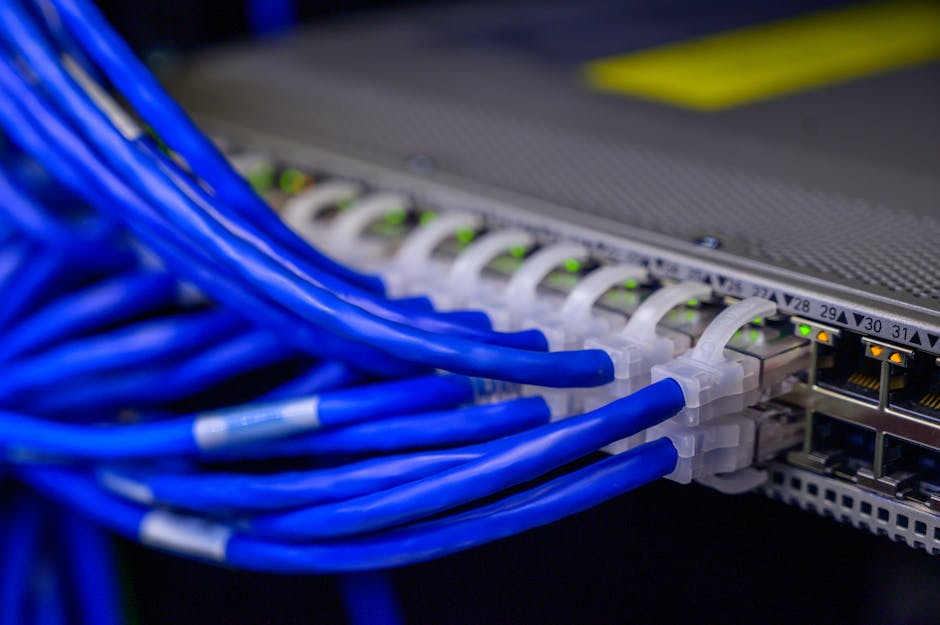
- Purpose and capacity: what the links need to support now, and any realistic allowance for future equipment or bandwidth. Environment: whether the cabling is for offices, plant rooms, outdoor areas, data spaces or industrial environments with vibration, moisture, temperature changes or electrical noise. Approved components: requirements for cabling, connectors, outlets, patch panels, cabinets and related components, including compatibility across the installed system. Pathways and separation: how cables are routed and supported, and how they are separated from sources of interference or other services where required. Workmanship: installation practices that protect cable performance, such as respecting bend limits and avoiding excessive pulling force or poorly managed bundles. Testing and acceptance: the tests to be carried out, the equipment and method used, and the criteria for passing or failing. Identification and records: consistent labels, test results, as-built drawings and a clear mapping between outlets, patch panels and network equipment.
Those last items often determine whether the system is maintainable. A link that passes a test but cannot be https://www.cyberdaily.au/strategy/14271-why-physical-network-infrastructure-is-the-overlooked-foundation-of-your-cybersecurity-strategy identified later is much harder to support. I keep a label maker in my laptop bag for a reason: clear labels are cheap insurance against guesswork.
Why cabling is part of cybersecurity
Physical infrastructure is not separate from cybersecurity. It carries the traffic that firewalls, switches, servers, cameras, access-control systems and endpoint detection platforms depend on. If the physical network is unreliable or poorly documented, security controls may be operating on a weaker foundation than people realise.
Physical faults create outages
A damaged connector, incorrectly terminated pair, crushed cable or poor patching decision can lead to intermittent links, errors and dropped connections. These faults are especially frustrating because they may appear inconsistent: a device works, then fails under load; a port reports a link, but applications behave erratically; or a connection becomes unreliable after someone moves equipment.
When that happens, teams can spend time investigating applications, servers or security policies before discovering that the real cause is a physical link. Good design, correct installation and meaningful test records reduce that uncertainty.
Faults can also create security blind spots
A network that behaves unpredictably is harder to monitor and troubleshoot. If links are mislabelled, undocumented or patched differently from the diagrams, teams may not know which device is connected to which switch port. That complicates incident response and makes it harder to check whether segmentation rules match the real environment.
Physical access matters too. Poorly secured cabinets or accessible outlets may make it easier for an unauthorised person to connect equipment. Cabling alone cannot prevent that risk, but it can support a more secure design: controlled spaces, identified ports, documented connections and appropriate switch configuration.
Think of firewalls and endpoint detection platforms as important security controls, not magic. They cannot compensate for a network whose physical layout is unknown, whose devices are attached to unmanaged switches, or whose traffic paths differ from the intended design.
Segmentation starts with capable switching
Network segmentation is the practice of separating systems or traffic so that one part of the environment cannot automatically communicate with everything else. It can limit the impact of compromise, reduce unnecessary access and help distinguish business systems from guest, building-management or operational technology (OT) networks.
But segmentation depends on both a correct design and switching infrastructure capable of implementing it. The design needs to define which systems communicate, through which paths, and under what controls. The switching and routing equipment then has to support and enforce those decisions.
A flat network—where everything sits in one broadcast domain—is often easier to set up initially, but can create avoidable risk. It can make unwanted communication easier and complicate monitoring and containment. Unmanaged switches in production make the situation worse: they may offer no practical way to apply, verify or troubleshoot the controls that a segmented design relies on.

Vendors such as Cisco and MOXA provide networking equipment used in different enterprise and industrial settings. The right choice depends on the environment, required features, support model and operational needs. The logo on the front is not the security design: equipment still needs to be selected, configured, maintained and tested appropriately.
Cabling supports this work by providing a known, documented physical layout. It does not create segmentation by itself, but a clear relationship between outlets, patch panels, switch ports and diagrams helps teams implement and verify segmentation with confidence.
Industrial environments need extra care
In industrial settings, network links may connect control equipment and other operational technology that cannot be treated like ordinary office endpoints. Downtime can affect physical processes, safety or production. The cabling specification should reflect the actual conditions on site, including distance, environmental exposure, electrical noise, equipment location and maintenance access.
Industrial networking products, including solutions from MOXA, may be considered where the environment and design call for them. Likewise, specialist physical-layer test tools from providers such as Garland can help teams inspect or validate network connections as part of an agreed troubleshooting or assurance process. Tool choice should follow the task; no tool replaces a sound design, safe work practices or complete records.
For OT and corporate IT, the important point is to plan the boundary deliberately. Document which links connect the environments, where controls are applied, and who is authorised to make changes. Then make sure the physical installation reflects that plan.
ACSC guidance needs solid foundations
Cybersecurity guidance, including guidance from the Australian Cyber Security Centre (ACSC), is much easier to apply when the organisation has a reliable view of its network and the ability to implement controls consistently. Measures such as restricting access, monitoring networks and managing devices depend on knowing what is connected and where traffic can flow.
ACSC guidance does not mean that cable quality alone makes an organisation secure. Rather, it assumes practical foundations: networks that can be understood, managed and monitored. If patching records are missing, equipment is unmanaged, or the physical layout does not match the design, implementing and validating security controls becomes more difficult.
Specification-grade cabling contributes to those foundations by making the physical layer testable and supportable. It is one part of a wider security programme that should also include secure configuration, access control, patching, monitoring and incident response.
What to ask before you sign off a cabling project
Whether you are planning a new installation or reviewing an existing site, ask practical questions. You want evidence and usable records, not just assurances that the job is “to spec”.
Which requirements and standards apply? Ask the designer or installer to identify the relevant standards, regulations and project requirements. What exactly is included? Confirm the scope: outlets, patch panels, cabinets, pathways, labelling, testing, drawings and any remediation. How will each link be tested? Agree on the acceptance criteria and the test records you will receive. Will labels and drawings match? Request an outlet-to-panel mapping that can be understood by someone who did not install the system. Does the network design support segmentation? Check whether the switching equipment, port configuration and physical layout support the intended separation of systems. Who can change the installation? Set expectations for access to cabinets, patching changes, documentation updates and the use of unmanaged equipment. What happens at 2am when this fails? Make sure the on-call team can identify the link, find the correct records, and know whom to contact.Specification-grade versus “it works today”
“It works today” approach Specification-grade approach Components are chosen mainly on price or availability. Components are selected for the application and treated as part of a compatible system. Installation quality is assumed. Requirements are defined, installation is checked and results are recorded. Labels and drawings are incomplete or out of date. Links are clearly identified and records are updated as part of the handover. Faults are diagnosed through guesswork and trial and error. Test results and accurate maps help narrow down faults quickly. Physical layout is treated as separate from security. The cabling plan supports the network’s operational and security design.Enterprise-grade cabling is about outcomes
Enterprise-grade cabling is not simply the most expensive option or the one with the boldest claims on a product sheet. It is an installation that meets the needs of the site, follows applicable standards, has been tested properly, and can be maintained over time.
In plain English, specification-grade cabling means knowing what you asked for, knowing how it was installed, and having evidence that the finished links meet the agreed requirements. It means fewer mystery cables, clearer fault-finding and a physical network that supports the design instead of undermining it.
That is good engineering, but it is also sound security practice. When the physical layer is reliable and documented, teams have a better foundation for segmentation, monitoring, incident response and the controls that sit above it. The cable may be out of sight. It should never be out of the security conversation.